
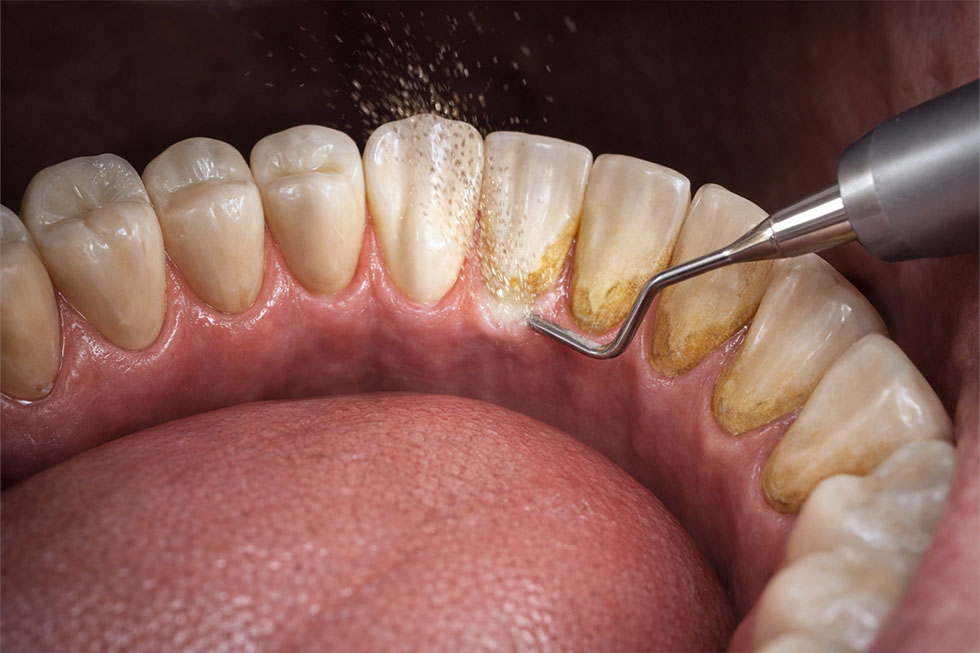

What to Do After Deep Teeth Cleaning?
After scaling and root planing — commonly known as deep cleaning — the gums typically stay tender for some time. Slight swelling often appears too. Patients frequently notice this sensitivity right away. The tissues immediately start healing. Thoughtful home care protects those early stages of healing and encourages strong gingival recovery.
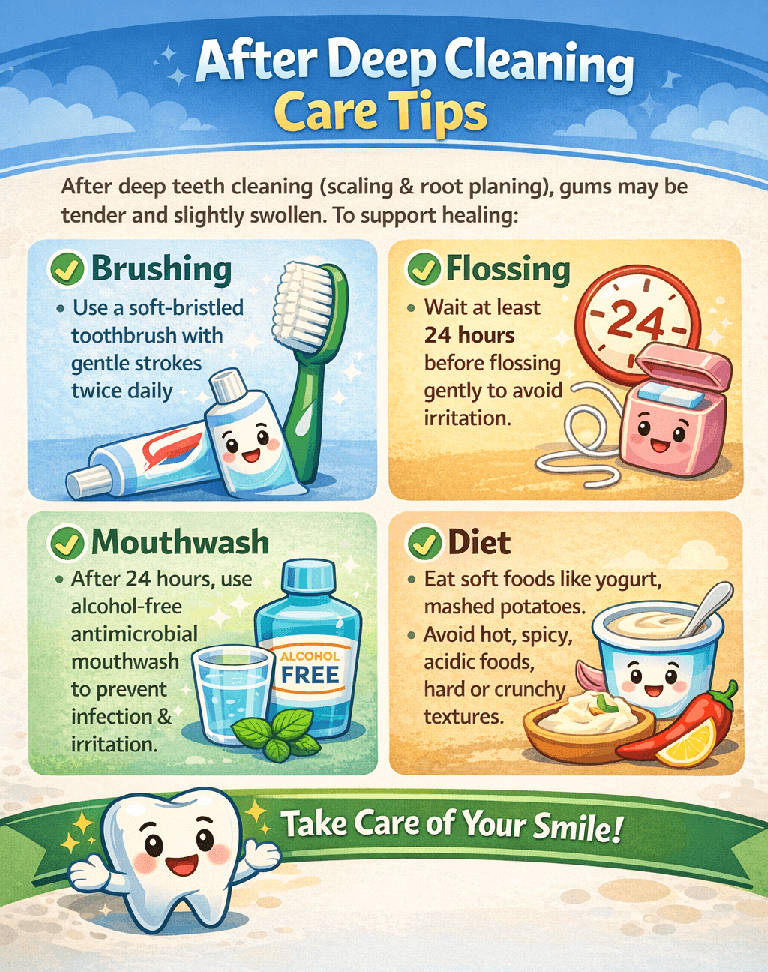
Brushing and Flossing After Deep Cleaning
- Resume brushing right from the first day.
A soft-bristled toothbrush works best. Gentle strokes matter a great deal. Twice-daily brushing keeps plaque under control around teeth and gums without aggravating already sensitive areas.
- Flossing requires a short wait.
Hold off for at least 24 hours. That brief period lets the gums begin to settle. Once past the initial window, gentle flossing removes trapped food particles and plaque. Light pressure prevents additional irritation to the healing tissues.
Mouthwash Choices After the Procedure
Rinsing with mouthwash becomes helpful after the first day.
Start after 24 hours have passed. Alcohol-free antimicrobial formulas are effective in this case. They lower bacterial levels. They help prevent infection. At the same time they avoid drying or further irritating tender gums. Alcohol-containing rinses usually heighten discomfort — best avoided completely during this phase.
Dietary Choices in the First Few Days
Soft foods bring the most comfort initially.
Yogurt, mashed potatoes, smoothies — these options chew easily and place minimal strain on teeth and gums. Several days of this approach reduces unnecessary irritation while the tissues remain vulnerable.
Hot foods can cause a burning sensation. Spicy foods may irritate the gums, and acidic foods can lead to inflammation.
Hard or crunchy textures press against sensitive areas and often create pain. Skipping them entirely for a few days supports smoother recovery.
Understanding the Gum Healing Timeline
Soreness and mild swelling feel completely normal after deep cleaning.
Gums gradually reattach to the tooth surfaces. The full process varies between individuals. Most see noticeable improvement anywhere from a few days to a few weeks. Steady, gentle care during this window strengthens attachment levels as the junctional epithelium reforms and tissues reorganize.
Lingering severe pain, pronounced swelling, or any unexpected change calls for immediate contact.
In the majority of cases symptoms settle within a few days. Consistent home routines noticeably speed the overall healing.
Habits to Avoid After Deep Cleaning
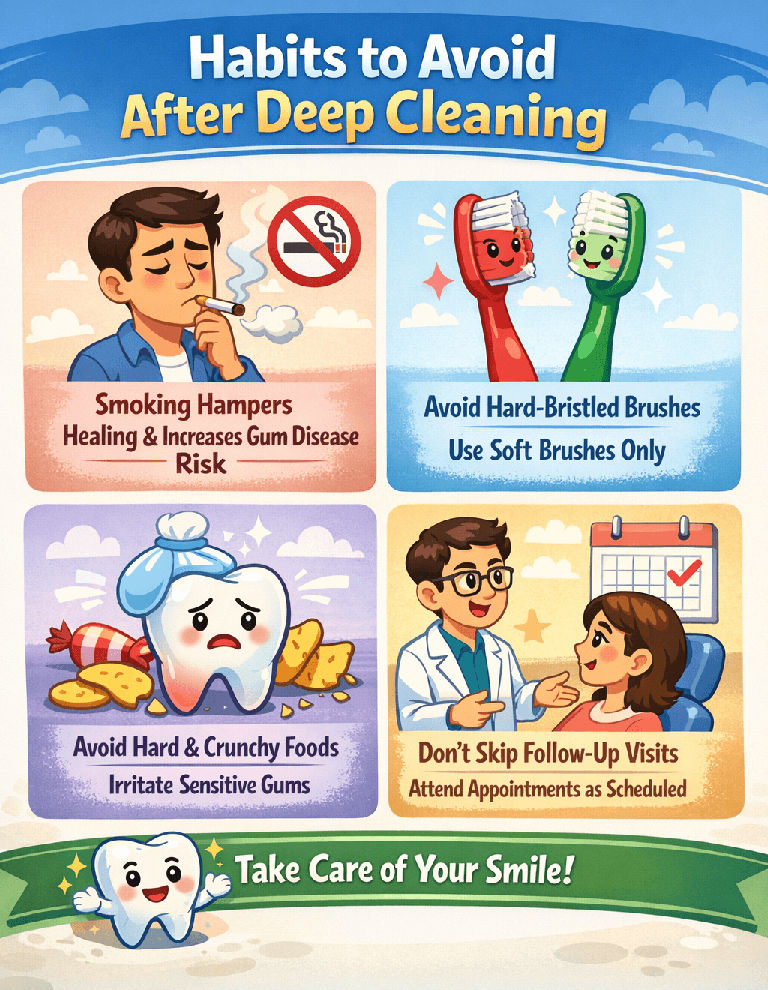
- Smoking seriously disrupts the healing process. It dramatically raises the risk of recurring gum disease.
- Hard-bristled toothbrushes harm delicate tissues — soft ones remain the only safe choice.
- Hard and crunchy foods continue to irritate vulnerable gums long after the appointment.
- Follow-up visits deserve full attention. Attending them as scheduled allows close monitoring of recovery and timely confirmation that everything progresses properly.
Value of Ongoing Professional Monitoring
Regular checkups are a crucial part of post-treatment care.
These appointments reveal exactly how well the gums respond. Necessary refinements to the treatment plan happen promptly when indicated. Continued vigilance also guards against future problems such as progressive gum disease or excessive plaque buildup.
Consistent attention to these home-care steps promotes sound gingival healing. It helps teeth remain stable and healthy. It keeps potential complications to a minimum. Whenever anything feels concerning or appears unusual, reaching out promptly ensures the best possible outcome.
A proactive commitment to oral health after procedures like this consistently delivers the strongest, longest-lasting results.