
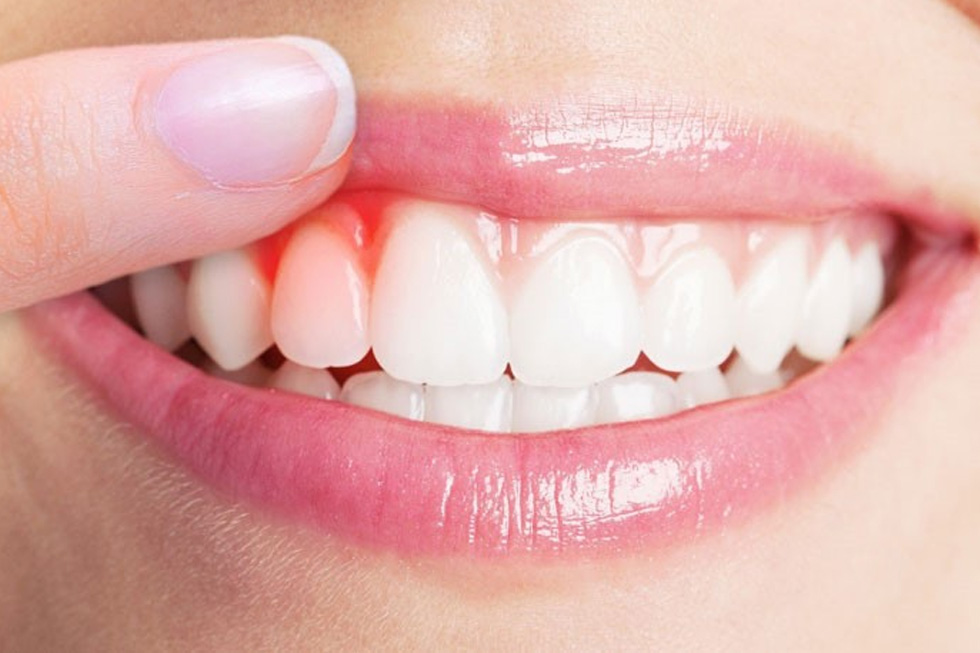

Periodontal disease remains one of the leading causes of tooth loss in adults. Most people think that once gum disease advances far enough, teeth are doomed. This is a reasonable concern, yet very often, it simply isn’t true.
With early detection and proper periodontal treatment, we can preserve natural teeth for many, many years. At my practice, the entire focus remains on conservative, evidence-based care that protects your own dentition whenever we possibly can.
What Actually Happens in Periodontal Disease
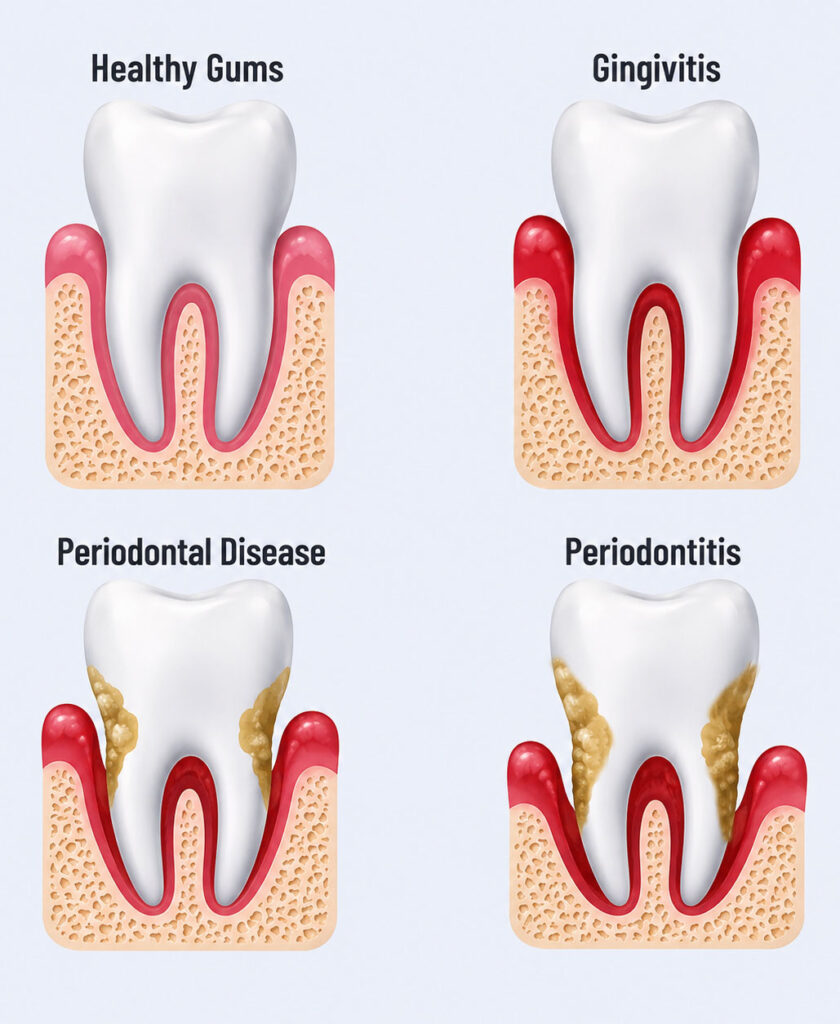
It usually starts quietly as gingivitis. Gingivitis typically begins with red, swollen, and bleeding gums. Bacterial plaque accumulates along the gumline.
At that point, the damage stays reversible—catch it here, and the gums can return to health. But when the infection isn’t stopped, it slips deeper. Periodontitis begins. Bacteria invade below the gumline, and the body responds with chronic inflammation.
Over months and years, the bone supporting the teeth slowly dissolves. Teeth may become mobile, and gums pull away and recede.
Can Teeth Still Be Saved Once Periodontitis Sets In?
In the majority of cases—yes. Timing determines almost everything. The sooner we intervene, the more predictable—and usually gentler—the outcome becomes.
How Treatment Actually Stops the Damage
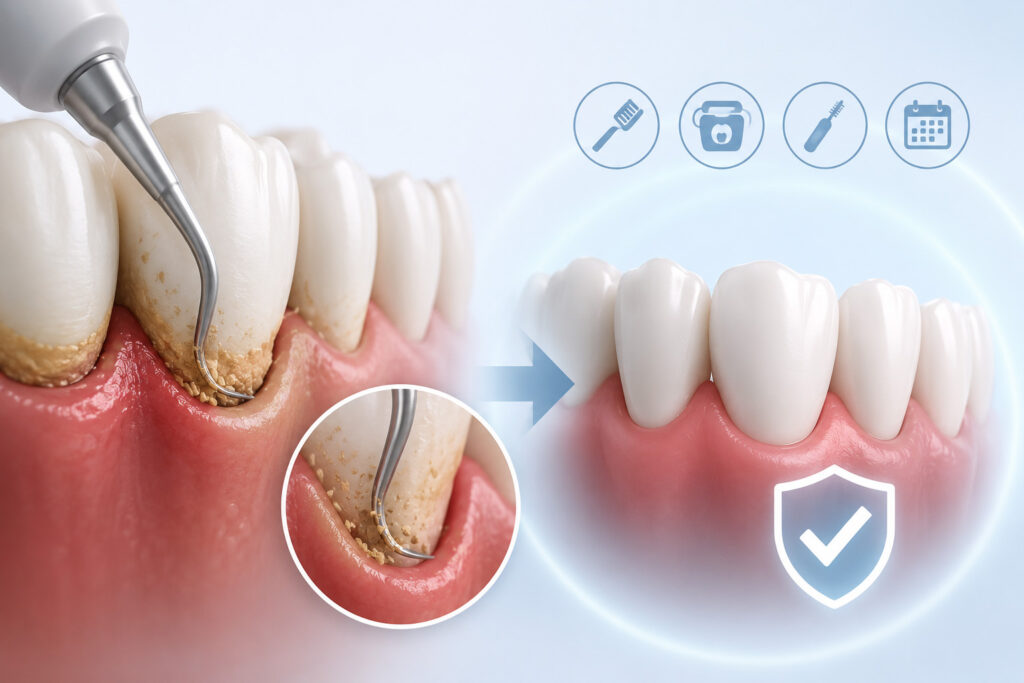
Our main goal is straightforward: eliminate the infection and stabilize everything that still supports the teeth. We do this through several key steps. First comes scaling and root planing—the deep cleaning most people have heard about.
We remove plaque, calculus, and bacterial byproducts from beneath the gums, disrupting the biofilm that keeps feeding the inflammation. Pocket depths gradually decrease, creating conditions where the gums get a chance to heal.
Once the bacterial assault ends, the body repairs whatever it still can. True, lost bone rarely regenerates completely without help, but we halt the destruction. Stability returns, and a stable, comfortable tooth can function reliably for decades.
Non-Surgical Therapy—Usually the Smart First Step
For most patients, we begin without surgery. Scaling and root planing serves as the foundation of treatment. We numb the areas so everything stays comfortable. Carefully, we clean below the gumline and then smooth the root surfaces.
Bacteria find it much harder to cling again. Afterward, inflammation typically subsides gradually. Gums tighten up, and bleeding drops dramatically. Pockets often become noticeably shallower.
Can someone live with healthy teeth even after periodontitis? Absolutely—provided we keep it controlled. Periodontitis becomes a manageable long-term condition. Consistent maintenance plus solid home care lets many people keep strong, functional natural teeth for twenty years and more.
When Surgery Becomes the Better Path?
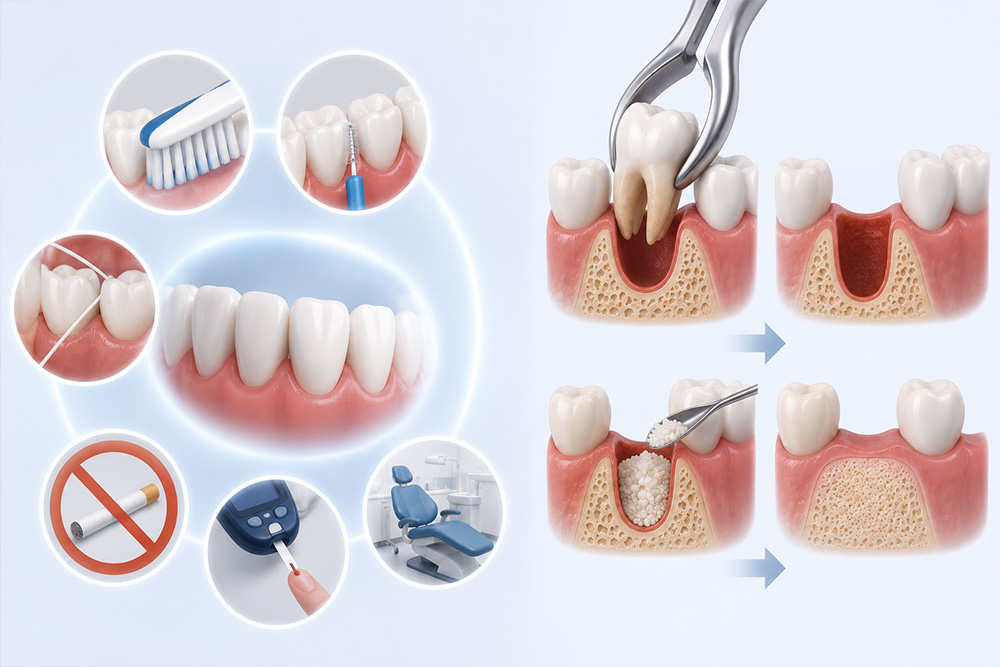
Sometimes non-surgical care alone doesn’t deliver enough long-term stability. Advanced bone loss or very deep pockets may need more. That’s when procedures like flap surgery let us reach and clean deposits hiding deep underneath.
Bone grafting rebuilds support that’s already gone. Guided tissue regeneration promotes the growth of specific tissues in targeted areas. These steps reduce pocket depth and restore healthier bone and gum architecture. A stronger foundation simply means the tooth lasts longer.
Patients frequently ask me: “If the tooth already feels loose, doesn’t that mean extraction is the only answer?” Not necessarily. Mobility often improves dramatically once inflammation disappears. Remove the infection, stabilize the area—and many of those same teeth regain solid, functional stability.
Maintenance—The Real Long-Term Game Changer
Treatment is ongoing. Maintenance determines whether the results are sustained. Anyone with a periodontitis history benefits most from professional cleanings every three to four months.
During those visits, we remove fresh bacterial buildup, re-measure pocket depths, track bone levels through radiographs when needed, and fine-tune home-care techniques. Skip those appointments, and bacteria return fast.
Inflammation creeps back, and bone loss quietly resumes. Regular care protects everything we worked so hard to save.
What You Bring to the Table Matters
Periodontal therapy succeeds best when the patient stays actively involved. Brushing twice a day with proper modified Bass technique. Cleaning between teeth every day—floss, interdental brushes, whatever works reliably.
Staying away from tobacco completely. Keeping conditions like diabetes well controlled. Showing up for recall visits without long gaps. Small, steady habits create surprisingly large differences in how long natural teeth survive.
And If Extraction Eventually Becomes Unavoidable…
We still protect the site. Socket preservation procedures maintain the surrounding bone and ridge shape. That thoughtful step keeps future options—like implants—much more predictable and aesthetic.
Early Detection Changes Everything
Early periodontal disease rarely hurts. That silence is exactly why routine exams matter so much.
Keep an eye out for:
- Bleeding when you brush or floss
- Bad breath that never quite goes away
- Gums that keep receding
- Teeth that begin to shift or feel loose
Spot these signs early, and treatment stays simpler, less invasive, and far more predictable. Early action gives natural teeth their best possible chance.
Conclusion
Periodontal disease does not automatically sentence teeth to extraction. Today’s approaches let us control infection, stabilize bone levels, and keep natural teeth functioning comfortably in the great majority of situations.
The winning formula combines skilled professional care with steady commitment at home. If bleeding gums, increasing mobility, or noticeable recession have caught your attention lately, don’t wait. Come in for an evaluation.
Preserving what nature gave you—whenever we can—remains our first priority, so you keep smiling with confidence for years ahead.