

Dr. Nooshin Ghayoumi, DDS, Inc. treats many patients who arrive hoping for dental implants only to learn the jawbone needs rebuilding first. Bone grafting before dental implants restores the lost volume so the titanium fixture anchors solidly and lasts for decades. The process may seem intimidating at first. Most people discover the steps move along smoothly and the outcome makes every appointment worthwhile.
Patients frequently wonder about pain levels. Healing duration. Eating comfortably again. This article lays out the entire sequence in clear, straightforward language so expectations stay realistic from the start.
Why Bone Grafting Before Dental Implants is Necessary?
Teeth stimulate the jawbone constantly. Remove a tooth and that stimulation vanishes. The bone resorbs quickly. Within months height and width diminish noticeably. An implant placed into an inadequate bone lacks primary stability. Early failure becomes a real risk.
Bone grafting before dental implants rebuilds the foundation. Graft material serves as a scaffold. The body replaces it gradually with living, vascularized bone. People who lost teeth years earlier or who wear removable dentures almost always need this step. The graft transforms a thin ridge into a sturdy platform ready for predictable implant success.
“The overall survival rate for implants placed in ridge grafted sites was 96.8%, while implants inserted in non-grafted ridges showed a survival rate of 97.0%.”
The Main Types of Bone Graft Materials
Four options dominate current practice. Each suits certain defects and patient profiles.
Autogenous bone harvested from the chin, ramus, or hip integrates fastest. The body recognizes its own cells immediately. Allograft from a tissue bank has been used safely for decades after rigorous processing. Xenograft derived from bovine sources provides a reliable framework that the host slowly remodels. Synthetic biomaterials composed of hydroxyapatite and beta-tricalcium phosphate mimic natural mineral content and resorb predictably as new bone fills in.
Many patients achieve excellent density with xenograft or synthetic grafts and avoid donor-site morbidity entirely.
Preparing for the Bone Grafting Appointment
A handful of preparations ease the day. Discontinue aspirin, ibuprofen, fish oil, and vitamin E seven days prior unless the physician directs otherwise. Arrange transportation home because light sedation often keeps things relaxed. Eat a normal breakfast unless told to fast.
Brush carefully that morning. Rinse with the prescribed chlorhexidine. Bring an updated medication list. Most patients settle quickly once the local anesthetic takes effect and the familiar surgical routine begins.
Step-by-Step Look at the Bone Graft Procedure
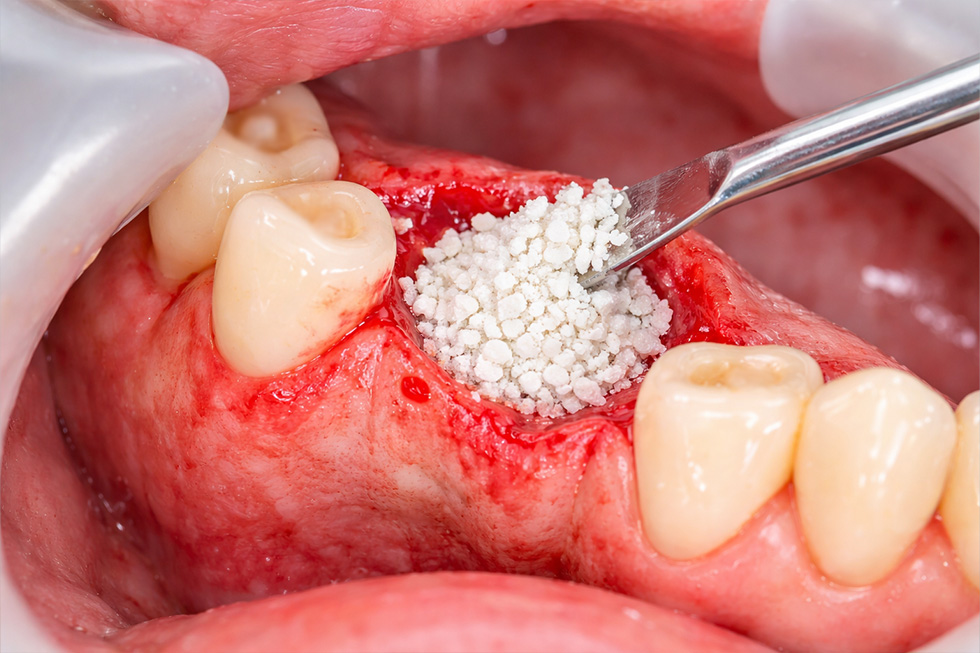
Appointments typically run forty-five to ninety minutes. Local anesthesia numbs the area completely. A small flap reflects the gum. The recipient site cleans thoroughly. Graft material packs into place. A resorbable collagen membrane frequently covers the graft to stabilize it and guide healing. The flap returns and closes with absorbable sutures.
Comfort remains high throughout. Patients often listen to music through headphones. Surprise registers when the procedure finishes sooner than anticipated.
What to Expect in the Days Right After Surgery?
Swelling usually peaks on day two or three. Ice packs applied twenty minutes on and twenty minutes off control it effectively. Discomfort resembles a moderate tooth extraction for most people. Prescribed analgesics keep it well managed.
Soft, cool foods (yogurt, applesauce, scrambled eggs, protein shakes) are easiest to consume during the first week. No straws. No very hot liquids. Light walking helps circulation. Heavy exercise waits until sutures feel secure and swelling subsides.
The Healing Period and Follow-Up Visits
Bone remodeling begins almost immediately. Full maturation requires four to nine months before implant placement. Check-ups every four to six weeks monitor progress. The grafted site firms noticeably over time. Patients sometimes comment that the area feels denser than surrounding native bone.
Meticulous plaque control around the surgical zone accelerates gingival healing. It also minimizes inflammation that could slow incorporation of the graft.
“After sinus bone augmentation, a 6 to 9 month healing period is often required prior to implant placement.”
When the Implant Phase Can Begin?
Once radiographic and clinical signs confirm dense, well-integrated bone, the implant surgery proceeds routinely. A cone-beam CT scan verifies trabecular pattern and density. Placement itself usually takes under an hour. Many return to normal activities the following day.
The complete timeline from initial grafting to final restoration averages six to twelve months. The waiting period rewards patients with an implant that integrates reliably and functions indistinguishably from a natural tooth.
Long-Term Benefits Patients Notice Most
Implants anchored in grafted bone demonstrate high long-term survival in clinical studies. Occlusal forces distribute evenly. Chewing efficiency returns fully. Facial contours remain supported so lips and cheeks maintain natural fullness. Patients regain the confidence to smile widely without hesitation.
The upfront effort preserves adjacent teeth and periodontal tissues. With diligent maintenance these restorations frequently endure twenty years or more.
At Dr. Nooshin Ghayoumi, DDS, Inc. every treatment plan receives careful explanation tailored to individual anatomy and goals. Bone grafting before dental implants opens the path to a stable, esthetic, and durable result. Patients who once felt limited by bone loss now enjoy chewing, speaking, and smiling with complete assurance.
Concerned about insufficient bone for implants? A consultation with 3D imaging clarifies options quickly. Call 949-502-8844 or request an appointment online. The journey toward a confident smile starts with one clear conversation.