
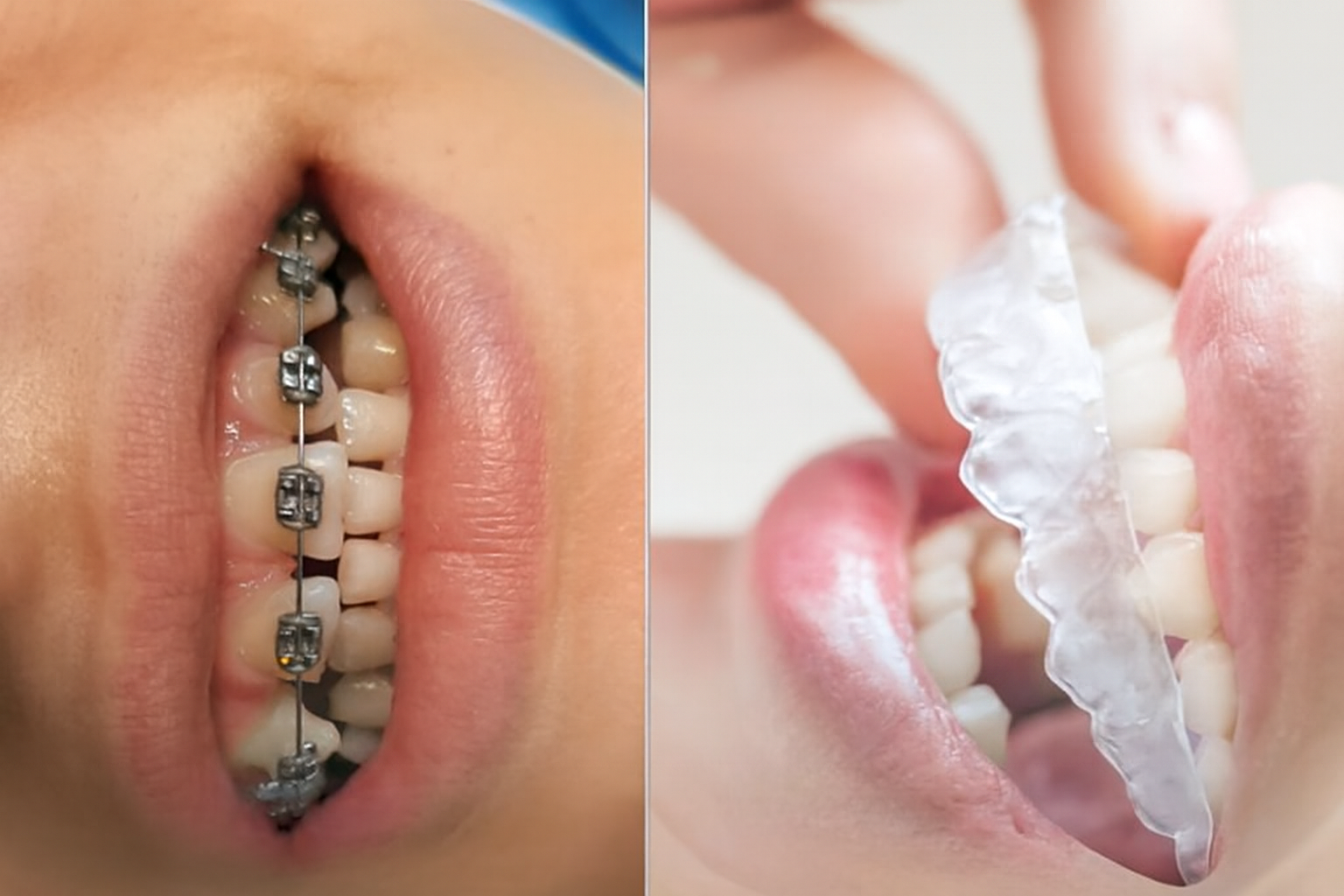

Invisalign Versus Braces: A Periodontal Perspective
Many patients ask whether to choose Invisalign or Braces when considering orthodontic treatment to achieve a straighter smile. However, it is essential to consider the health of the gums and underlying bone structures, which can significantly impact the long-term results.
As a specialist in Periodontics, Dr. Ghayoumi emphasizes the importance of addressing both dental alignment and gum health when choosing between these treatments.
What Are Braces?

Braces are a traditional orthodontic solution for correcting misaligned teeth and bite issues. However, for patients with gum recession or significant periodontal concerns, it’s crucial to consult a periodontist like Dr. Ghayoumi before starting treatment, as these conditions can affect the success of braces and overall gum health.
This method involves attaching metal or ceramic brackets to each tooth, which are connected by a metal arch wire and secured with rubber bands. Over time, the tension applied by the wire gradually moves the teeth into their ideal positions.
Lingual Braces:
A modern variation of traditional braces is lingual braces, where the brackets are attached to the backside of the teeth, making them less visible. Although discreet, lingual braces require specialized care and adjustments.
Benefits of Braces:
- Suitable for complex orthodontic cases involving severe crowding or major bite corrections.
- Consistent pressure allows for precise tooth movement.
- Available in less conspicuous ceramic or clear options for improved aesthetics.
What Are Invisalign Aligners?

Invisalign is a more recent innovation in orthodontic care, offering a discreet option for patients who need mild to moderate alignment adjustments. Made from BPA-free plastic, these custom-fit, transparent trays are designed to fit snugly over the teeth, gradually shifting them into the desired alignment.
How Invisalign Works:
- Patients receive a series of aligners, each worn for approximately two weeks.
- Invisalign aligners are removable, allowing for easy maintenance of oral hygiene.
- Advanced technology, including advanced 3D imaging techniques, is used to design the aligners.
Key Advantages of Invisalign:
- They are virtually invisible, making them popular for adults and teenagers.
- It is more comfortable due to the absence of metal wires and brackets.
- Removable for eating, drinking, brushing, and flossing, providing greater flexibility.
Invisalign vs. Braces Pros and Cons
| Feature | Braces | Invisalign |
|---|---|---|
| Appearance | Visible metal or ceramic brackets | Transparent trays, nearly invisible |
| Comfort | May cause initial discomfort | Smoother, more comfortable fit |
| Removability | Fixed in place | Removable for meals and cleaning |
| Treatment Time | Longer for severe cases | Generally faster for mild to moderate issues |
| Maintenance | Requires careful cleaning around brackets | Easier to maintain oral hygiene |
| Cost | Typically lower | Usually higher due to advanced technology |
| Effectiveness | Effective for all types of misalignment, but for patients with periodontal issues such as gum recession or bone loss, treatment plans should be adjusted to accommodate the unique needs of their gums and jawbone. | Best for mild to moderate adjustments |
Is Invisalign Faster Than Braces?
Invisalign often provides faster results for mild to moderate cases, but for patients with gum recession or bone loss, it is essential to evaluate the underlying periodontal health before beginning treatment.
Dr. Ghayoumi can help determine if additional periodontal treatments, like gum recession repair, are needed for optimal results.
Treatment can range from 8 to 12 months, whereas traditional braces may take 18 to 24 months or longer for complex issues. However, the timeline depends on individual dental needs and adherence to the recommended treatment plan.
Are Invisalign Better Than Braces for Complex Cases?
Braces excel in addressing severe dental issues, including significant bite problems and major crowding.
They exert constant pressure and allow precise adjustments, making them the preferred choice for complex treatments. Invisalign is better suited for less severe cases, offering a more convenient and discreet option.
Lifestyle Factors and Patient Preferences Choosing between braces and Invisalign depends on lifestyle and personal preferences.
Invisalign is ideal for patients who prioritize aesthetics and want a nearly invisible solution. However, it’s important to ensure that patients with periodontal concerns (e.g., gum recession, bite problems) consult with a periodontist to determine if additional treatments like gum grafting or crown lengthening are necessary for optimal results.
Braces are better suited for patients who:
- Require correction for significant alignment or bite issues.
- Want a more cost-effective option
- Prefer a fixed solution that eliminates the need for self-discipline.
Why Consult a Professional Before Choosing?
An experienced orthodontist or a periodontist like Dr. Ghayoumi will evaluate your dental health, alignment needs, and personal preferences to recommend the most effective treatment.
With specialized expertise in periodontal health and implant surgery, Dr. Ghayoumi ensures that your treatment plan addresses not only alignment but also gum and bone health for long-lasting results.
For those seeking a comprehensive treatment plan that includes both orthodontic care and periodontal health, schedule a consultation with Dr. Ghayoumi.
With expertise in periodontal treatment, gum recession repair, and implant surgery, Dr. Ghayoumi will create a customized treatment plan to help you achieve a healthy, beautiful smile.