Periodontics & Implant Surgery
Dr. Nooshin Ghayoumi, DDS, Inc.
Periodontal gum disease affects about 50% of people 30 years and older. This disease leads to tooth loss, the need for dentures, and a host of additional oral health problems. Although this disease is reportedly common, due to the many problems it causes, its complete treatment is essential.
This disease does not discriminate and affects anyone of any age and gender. Choosing a periodontal treatment method for gum disease, which includes surgical or non-surgical procedures, depends on the stage of the disease, the condition of the gum tissue and teeth, and the person’s general health.
Swelling and bleeding gums are among the first signs that bacteria has caused a gum infection. If periodontal treatment is not started, the disease can spread and destroy the supporting structure of the tooth in the jawbone. Eventually, the teeth become loose and need to be pulled.
Periodontal diseases are infections of the structures around the teeth, which include the gums, periodontal ligaments, and alveolar bone. In the early stages of periodontal disease – gingivitis – the gum is infected, and in more severe cases, all tissues are infected.
Periodontal disease is caused by plaque bacteria, a sticky substance that forms on the teeth a few hours after brushing. It is interesting to know that the cause of most of these problems is the body’s reaction to bacterial infection.
In an attempt to destroy this bacterium, the cells of the immune system release substances that lead to inflammation and destruction of the gums, periodontal ligament, or alveolar bone, causing swelling, bleeding gums, symptoms of gingivitis (early stages of periodontal disease). And loose teeth are severe symptoms of periodontitis (advanced stages of the disease).
Although the accumulation of bacterial mass is the leading cause of periodontal disease, several other factors, including other diseases, medications, and oral habits, also lead to this disease. These factors increase the risk of gum disease or aggravate it when the gum is infected.

Having a genetic predisposition does not mean that gum disease is inevitable. Even people more susceptible due to their genetic structure are prone to periodontal gum disease, which can be prevented and controlled with proper oral care.

Smoking increases the risk of periodontal disease and worsens it if already present. It’s the leading cause of treatment-resistant disease. Smokers have more plaque, which raises the risk of bone loss.

Anything that makes it difficult for the toothbrush and dental floss to reach all areas of the teeth increases plaque formation above and below the gum line, raising the risk of gum disease.
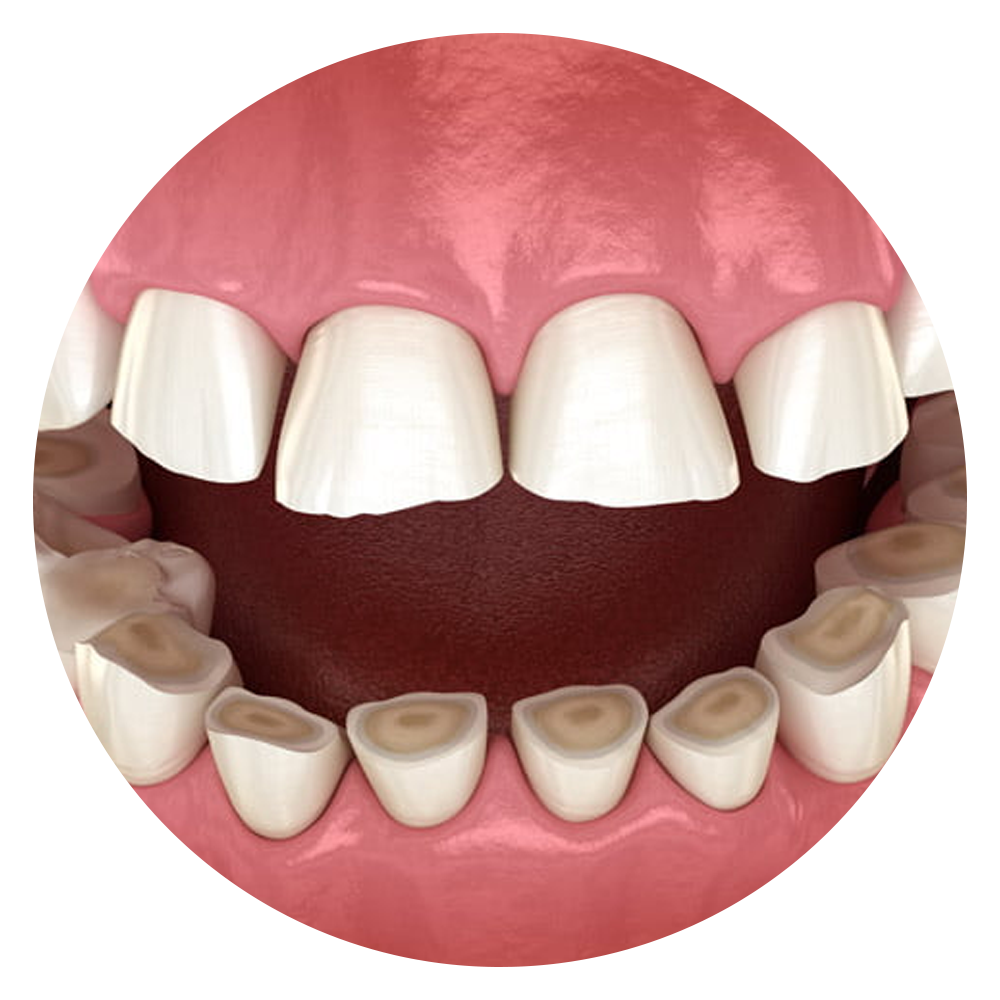
These habits do not cause periodontal disease, but if the tooth is inflamed, it can increase the severity of the disease. These habits may also cause damage to the teeth and complicate the treatment of gum disease.

Whenever hormones fluctuate in the body, changes occur in the mouth. Puberty and pregnancy, as well as menopause, can temporarily increase the risk and severity of gum disease.

Medications like antidepressants, diuretics, and high blood pressure drugs can cause dry mouth, increasing plaque buildup. Some medications also make gums more prominent, further promoting plaque formation.
Diseases like diabetes, leukemia, AIDS, and HIV increase the risk of periodontal disease. It’s harder to control with these conditions, but a skilled dental professional can help maintain gum health.

The effect of nutrients is essential for the body’s general health, including the immune system and gums and mouth health.

Good oral hygiene and regular dental care (every six months or more often if you have gum disease) can prevent periodontal gum disease. Brushing and flossing daily and correctly will remove a lot of plaque from the teeth. Specialized tooth cleaning by a dentist or oral hygienist controls the plaque in areas that are difficult to reach with a toothbrush and dental floss.
Gum disease (periodontal) is treated with different methods that are chosen according to the stage of the disease, how the body reacts to the initial treatments, and your general health.
After thoroughly evaluating the gums, treatment options include non-surgical and surgical treatments. Non-surgical methods control bacterial growth. Surgical treatments restore the surrounding tissue and support the tooth.
During a routine dental checkup, the dentist or oral hygienist will remove the plaque and tartar that has accumulated and hardened on the tooth’s surface. (Plaque is the layer that covers the tooth, which can cause decay and gum disease. Tartar is the hard, thick, yellowish deposit that builds up on the tooth.)
When plaque and tartar reach a level of accumulation, they can only be removed by specialized scaling. Deep dental scaling removes plaque and tartar from above and below the gum line in all areas of the teeth. If you have symptoms of gum disease, your dentist may recommend professional scaling more than twice a year.
This method, which is a deep mass removal and non-surgical method, is performed under local anesthesia. Hard mass and sediment (tartar) are removed from the areas above and below the gum line (scaling).
Also, any hard stains created on the teeth’ deep areas are cleaned. Deep cleaning removes bacteria, and the clean surface of the gums is reattached to the teeth.
The gum is pulled up during this treatment, and the plaque is removed. In some cases, the irregular surfaces of the damaged bone are smoothed.
This limits the areas where pathogenic bacteria can hide. Then, the gums are placed so the gum tissue is wholly connected to the tooth. Removing the space between the gums and teeth also reduces the growth areas of harmful bacteria. The likelihood of severe health problems leading to periodontal disease is reduced.
Parts of the patient’s artificial or donor bone are used in bone grafting. Grafted bone replaces bone and helps regrow bone in areas where bone has been lost due to periodontal disease.
This method preserves the connection of the tooth to the bone. Another treatment called tissue engineering stimulates the body to repair bone and tissue rapidly.
This treatment strengthens the thin gums and replaces them in areas where they have receded (where tooth roots are exposed). Most of the time, the graft tissue is taken from the roof of the mouth and stitched in the required place.
This method is performed when the tooth’s supporting bone is lost and stimulates the growth of bone and gum tissue. This treatment is performed with flap surgery, and a small piece of porous fabric is placed between the bone and the gum tissue.
This object prevents gum tissue from growing in areas where bone should be, allowing bone and connective tissue to regrow to support the teeth better.
Bone surgery smooths surface bone cavities caused by moderate to severe bone resorption. After flap surgery, the bone around the tooth is reshaped to reduce cavities. This makes it difficult for bacteria to accumulate and grow.
In some patients, non-surgical root cleaning and scaling methods are the only treatment needed for gum disease. Surgery is performed when the tissue around the tooth is not healthy and cannot be repaired with non-surgical methods.
Dr. Ghayoumi is an expert in both non-surgical and surgical methods to treat periodontitis. She has successfully treated thousands of patients with periodontitis during her 20 years of dental practice. As a dedicated periodontist, Dr. Ghayoumi possesses a deep understanding of the intricacies of periodontal diseases and their treatment.
Her extensive knowledge and training allow her to offer a wide range of periodontal services, including:


When you visit Dr. Ghayoumi for periodontal treatment, you can expect a caring, compassionate environment focused on your comfort and well-being. During your initial consultation, she will conduct a thorough examination, including a review of your dental and medical history, clinical evaluations, and diagnostic tests. Based on her findings, Dr. Ghayoumi will develop a customized treatment plan tailored to your specific needs.
Throughout the treatment process, Dr. Ghayoumi and her dedicated team will guide you, providing support and answering any questions you may have. By using the latest techniques and state-of-the-art equipment, Dr. Ghayoumi ensures that you receive the highest quality care possible.
Schedule Your Appointment Today
If you are seeking specialized periodontal treatment, Dr. Ghayoumi is here to help. With her expertise and commitment to excellence, she will work closely with you to restore your oral health and give you a smile you can be proud of. Contact our office today to schedule your appointment and take the first step toward optimal oral health.