
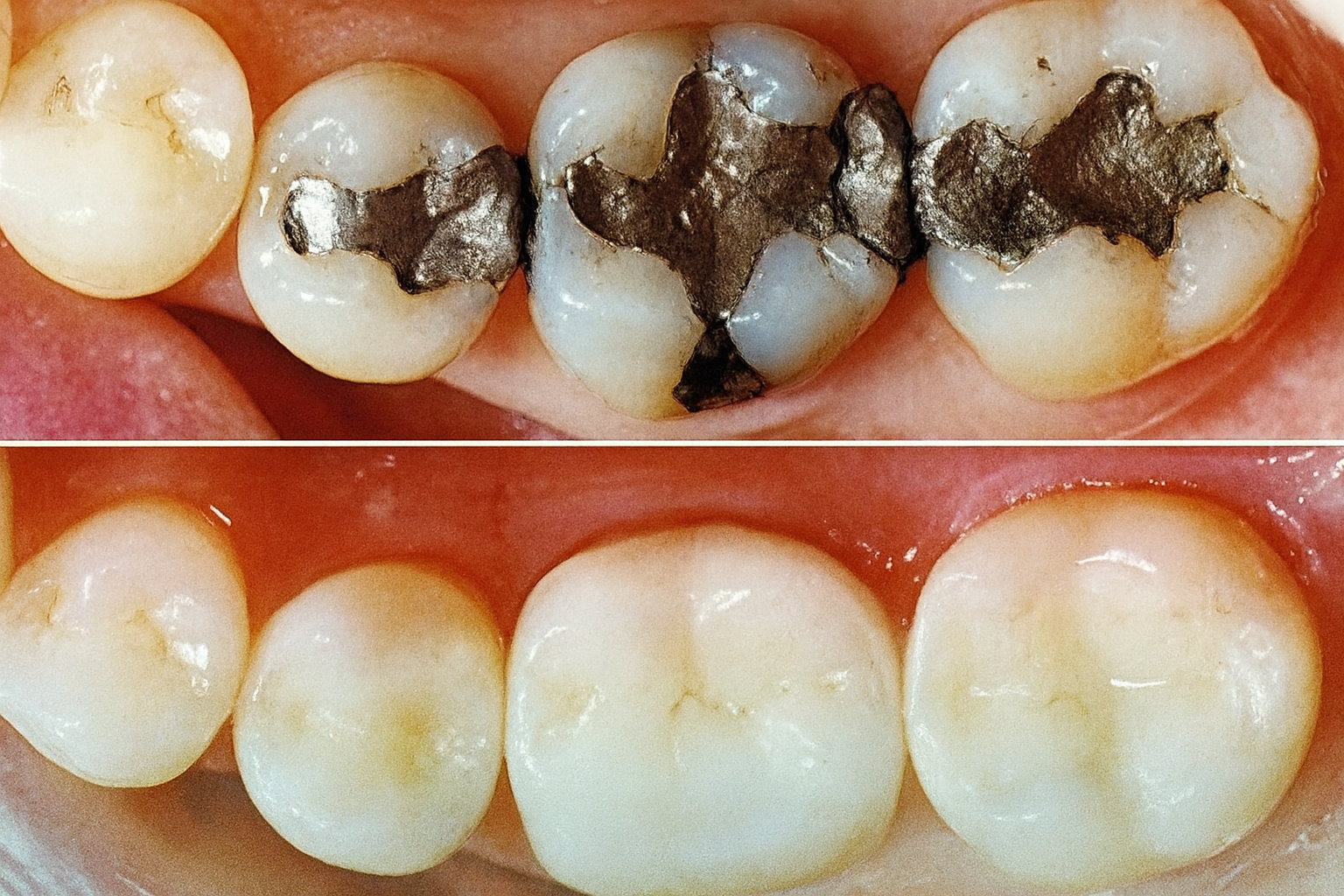

Composite or Amalgam?
There are different types of filling materials, each offering its own advantages and disadvantages.
The restoration itself matters. So does its relationship with the surrounding gingival tissue, particularly when decay approaches the gumline.
In addition to restoring teeth, the way a filling is shaped and positioned can directly influence gum health, plaque accumulation, and long-term periodontal stability.
How Fillings Affect Gum Health
Poorly contoured or improperly placed restorations can create plaque traps that are difficult to clean.
Overhanging margins are a common issue. Plaque accumulates, followed by inflammation. Over time, periodontal pockets may form due to the loss of clinical attachment.
Fillings placed too close to or below the gumline (subgingival restorations) may also increase the risk of gum irritation, bleeding, and recession if not properly managed.
For this reason, maintaining proper margins and smooth surfaces is essential for protecting the gums and supporting long-term periodontal health.
Composite vs Amalgam Effectiveness
Amalgam remains widely used, with millions of restorations placed annually worldwide. Composite use continues to rise as well.
A restoration may remain intact yet still compromise surrounding soft tissue if margins are poorly finished or plaque control becomes difficult.
What Is an Amalgam Filling?

“Dental amalgam has been used for more than 150 years and remains one of the most durable and cost-effective restorative materials available.”
American Dental Association (ADA)
Amalgam, or silver fillings, are a mixture of different metals that chemically react. Mercury, which constitutes 50% of amalgam, is the primary component that enables the material’s stability and durability.
Over time, marginal breakdown can occur. Edges may become rough. These irregularities tend to retain plaque, which may lead to localized gingival inflammation if not carefully maintained.
What Are Composite Fillings?

Composite restorations, commonly referred to as white fillings, match the natural color of teeth. Their composition includes resin polymers and fine glass particles.
After preparing the cavity, an acidic gel conditions the surface. A bonding agent follows and is cured with light. The composite material is then placed incrementally and hardened using the same curing light.
This level of control allows precise contouring, minimizes plaque-retentive areas, and supports improved gingival health, especially in areas close to the gumline that may remain sensitive during early healing.
Composite vs Amalgam: Which Is Better for Gum Health?
Composite fillings, when properly placed, can create smoother and more precise margins that are easier to clean and more compatible with gum tissue.
Amalgam fillings, while strong, may be more prone to marginal breakdown over time, potentially increasing the risk of plaque accumulation near the gumline.
Both determine how well the surrounding tissues remain stable in the long term.
Composite vs Amalgam: Aesthetic Choice
Amalgam fillings are darker and silvery in color after they are applied to the teeth. On the other hand, composite fillings are tooth-colored, which gives the teeth a more beautiful appearance.
In some cases, improving the shape and contour of teeth with composite can also support better gum symmetry and overall smile aesthetics, especially when combined with periodontal treatments such as gum contouring.
“The use of dental amalgam is declining due to concerns about aesthetics and mercury content, while composite materials are gaining popularity for their ability to bond directly to tooth structure.”
Journal of the American Dental Association (JADA)
Composite or Amalgam: Which Lasts Longer?
While composite fillings can withstand the everyday stresses of chewing, they are less resistant to excessive force.
This is why amalgam is often recommended for patients who suffer from bruxism or temporomandibular disorders (TMD).
However, excessive occlusal forces and improperly adjusted restorations may also contribute to gum recession or localized periodontal stress over time.
When a Periodontist Gets Involved in Restorative Cases
A periodontist becomes involved when:
- Decay approaches the gumline
- Periodontal disease or bone loss is already present
- Restoration margins extend subgingivally
- Crown lengthening is needed to expose adequate tooth structure
Periodontal procedures such as crown lengthening, gum therapy, or soft tissue management may be necessary to create a healthy foundation before or after placing a filling.
How to Choose the Right Filling?
Gingival health must remain stable. Long-term periodontal support matters just as much as the restoration itself.
Treatments such as gum recession repair, periodontal therapy, or crown lengthening may be recommended to ensure both functional and aesthetic success.
If you notice signs like bleeding gums, inflammation, or gum recession around a filled tooth, a periodontal evaluation can help prevent long-term damage and ensure the success of your restoration.
Sources: